
Rocky beaches ask more from footwear than a soft, sandy shoreline. Uneven stones can press through thin soles, wet rock can be slick, and loose footwear may shift when water moves around the foot. The best aqua socks for a rocky beach are therefore not simply the lightest pair: they are the pair whose grip, fit, sole thickness, and drainage match the shoreline you expect to use.
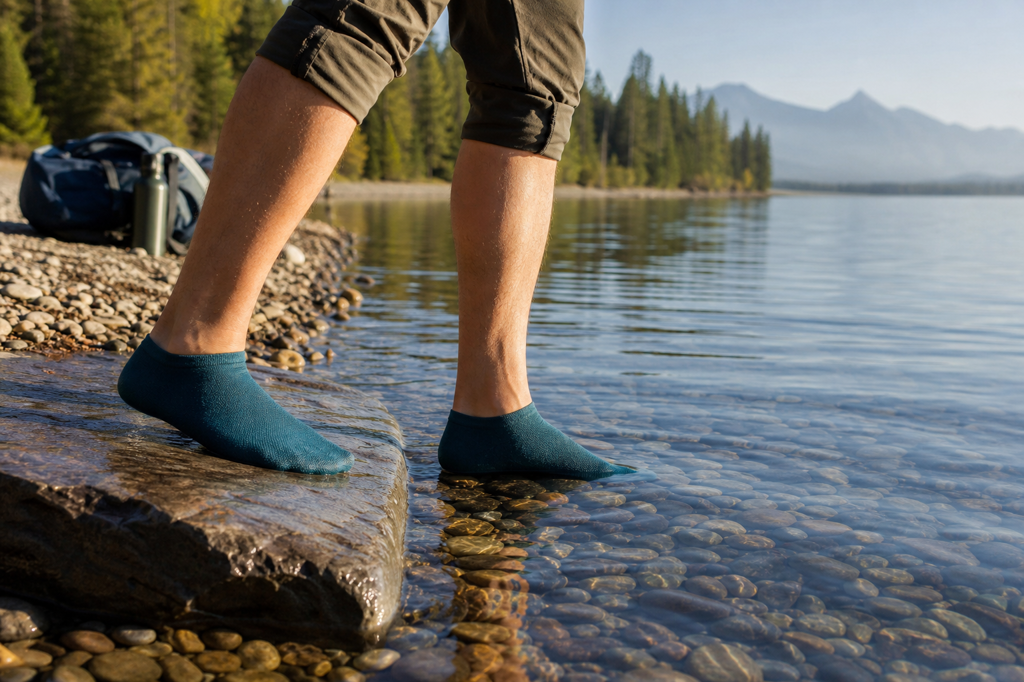
Start with the actual shoreline
“Rocky beach” can describe several different surfaces. Rounded pebbles create pressure points but are usually less likely to cut. Flat wet rocks demand traction. Sharp or jagged ground calls for more structure and toe coverage than a sock-like design can provide. Before choosing a pair, look at recent beach photographs and local access information instead of assuming every water entry is alike.
Grip matters, but tread alone is not enough
A dramatic tread pattern does not automatically guarantee good wet-surface performance. Rubber compound, the amount of outsole touching the ground, and how securely the footwear stays on the foot all influence stability. Check the current product description for a non-slip or textured rubber outsole, but still move carefully: no water shoe makes algae-covered rock risk-free.
The Lightweight Beach Barefoot Aqua Socks are positioned as a flexible, quick-dry option with a non-slip focus. They can suit general beach, pool, and light shoreline use when a shopper wants packability and a barefoot-style feel. For sharp, highly uneven terrain, compare them with a more structured water shoe before deciding.
Choose a fit that stays secure in moving water
Aqua socks should feel close without painfully compressing the toes. Too loose, and the heel may lift or the fabric may twist. Too tight, and seams or edges may rub after the material becomes wet. Consult the current size guide, measure both feet, and use the larger measurement when the two differ. If you are between sizes, follow the product-specific guidance rather than applying one rule to every design.
- Check that the heel does not slide during a normal step.
- Confirm the toe area lies smoothly without curling the toes.
- Look for rough seams or hard edges before the first outing.
- Test the fit at home while the product is still clean and returnable.
Sole thickness changes the experience
Thin soles improve flexibility and packability, but they transmit more of the ground’s shape. That can be comfortable on sand and tiring on larger stones. Thicker soles generally add protection, although they may feel heavier and take more space in luggage. The useful question is not “Which sole is best?” but “How much ground feel am I comfortable with on this particular beach?”
Drainage, drying, and care
Quick-dry fabric helps, but airflow and construction matter too. After use, rinse away sand, salt, and grit with fresh water. Remove an insole if the manufacturer says it is removable, open the footwear as much as possible, and air-dry it away from intense heat. Do not pack damp aqua socks in a sealed bag for an extended period. Always follow the care instructions on the current product page because materials and adhesives vary.
A practical pre-trip check
- Identify whether the entry is sandy, pebbled, flat rock, or jagged ground.
- Prioritize grip, protection, or packability based on that surface.
- Confirm the size and current product specifications.
- Inspect the footwear and test the fit before travel.
- Bring an alternative if the destination includes sharper terrain than the footwear is designed to handle.
Frequently asked questions
Are aqua socks enough for every rocky beach?
No. Lightweight aqua socks can help with grip and minor surface discomfort, but they are not a substitute for reinforced water shoes on sharp rock, coral, or demanding trails. Match the protection level to the terrain.
Should aqua socks fit like regular socks?
They should generally feel close and secure, but sizing depends on the design. Use the current size chart and make sure your toes are not compressed and your heel does not lift.
Can non-slip aqua socks still slide?
Yes. “Non-slip” does not remove the risk created by algae, loose stones, waves, or steep wet surfaces. Take short, deliberate steps and use available hand support where appropriate.
Final takeaway
For rocky beaches, begin with the shoreline rather than the product label. A secure fit and textured sole may be appropriate for rounded stones and ordinary water access, while jagged surfaces justify more structure and toe protection. Review the latest specifications, sizing, availability, shipping, and return terms on the product page before ordering.